
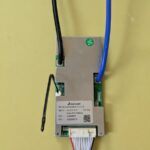
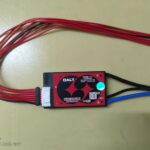
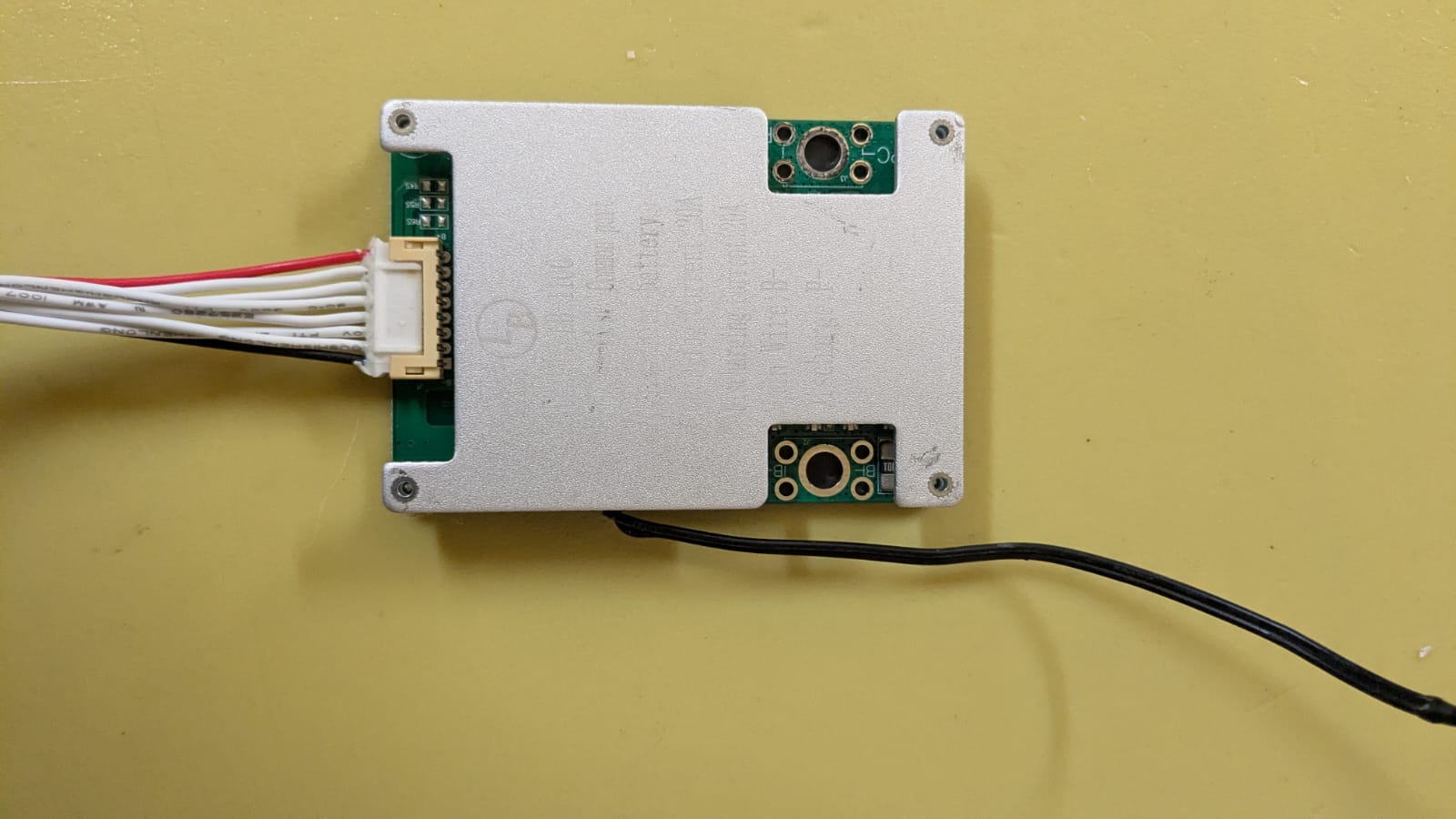
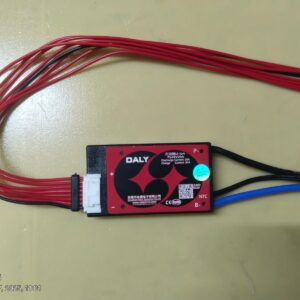
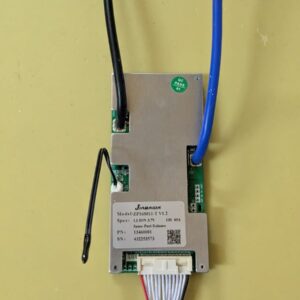
Description
Key Specifications & Features
From the listings I found:
-
It’s rated for a 10-series (10S) battery configuration using NMC (Li-ion) chemistry.
-
Nominal voltage around 36-37 V. One listing says “Nominal Voltage: 37 volts” for 10S.
-
Maximum continuous discharge (and presumably charge) current: 20 A.
-
Same-port common for charge and discharge (in one description).
-
Series count mapping: the HP16SA series supports many “S” counts (4S up to 16S) via wiring of the balance harness.
-
Protection features: Over-charge, over-discharge, over-current, short circuit, passive balancing. For example: the specification for “10S 36 V Li ion Battery BMS with 20 A or 30 A constant current” lists those.
⚠️ What to Be Careful About / Verify
Here are important caveats and things you should check before using this BMS:
-
Chemistry compatibility: It’s specified for NMC (and general Li-ion) in some versions. Ensure your cells are indeed NMC (or at least compatible Li-ion) and the cut-off/over-voltage thresholds match those cells.
-
Series count correctness: It’s for 10S (battery pack comprised of 10 cells in series). Using wrong series will lead to incorrect voltages and potential damage.
-
Current rating vs application load: 20 A continuous is moderate. If your vehicle or pack sees surges (motors, heavy loads) or you expect >20 A continuous/discharge, you might need a higher current rated BMS.
-
Balance current / cell balancing speed: Passive balancing is usually slower. If your cells are large capacity or frequently imbalanced, you should check how strong the balance current is (not always detailed).
-
Wiring & layout: As per user-forums for JBD boards: correct wiring of the balance lead is critical. Mistakes lead to mis-voltage readings or protection triggering. For example:
“It looks set up for 11s. … Also … have you done this?”
-
Operating environment: Check ambient/operating temperature range, mounting, ventilation. The datasheet shows wide tolerances: “Ambient temperature: -30℃ ~ +75℃” for HP16SA series.
-
Warranty and vendor: One listing shows only 15 days warranty. For a critical use case (EV) you may want better support.
🎯 Is It a Good Fit for Your Use Case?
If your project is a 10S (~36 V nominal) battery pack using NMC cells, and your expected current draw is up to ~20 A (with moderate surges), then yes — this BMS is a valid option. It’s cost-effective and the spec fits.
However, if any of the following apply, you might want to consider an upgrade:
-
Your motor or load will draw higher than ~20 A continuous (or significant surges above 20 A) → consider a 30A/40A or more BMS.
-
You prefer “smart features” (Bluetooth, CAN/RS485 telemetry) for monitoring cell voltages, balance state, pack health => this appears to be a hardware type (not full “smart”).
-
Your ambient environment is extreme (very hot, very cold) and you need more rugged board.
-
You want longer warranty/support for reliability (especially for EV conversion).
Reviews
There are no reviews yet.