

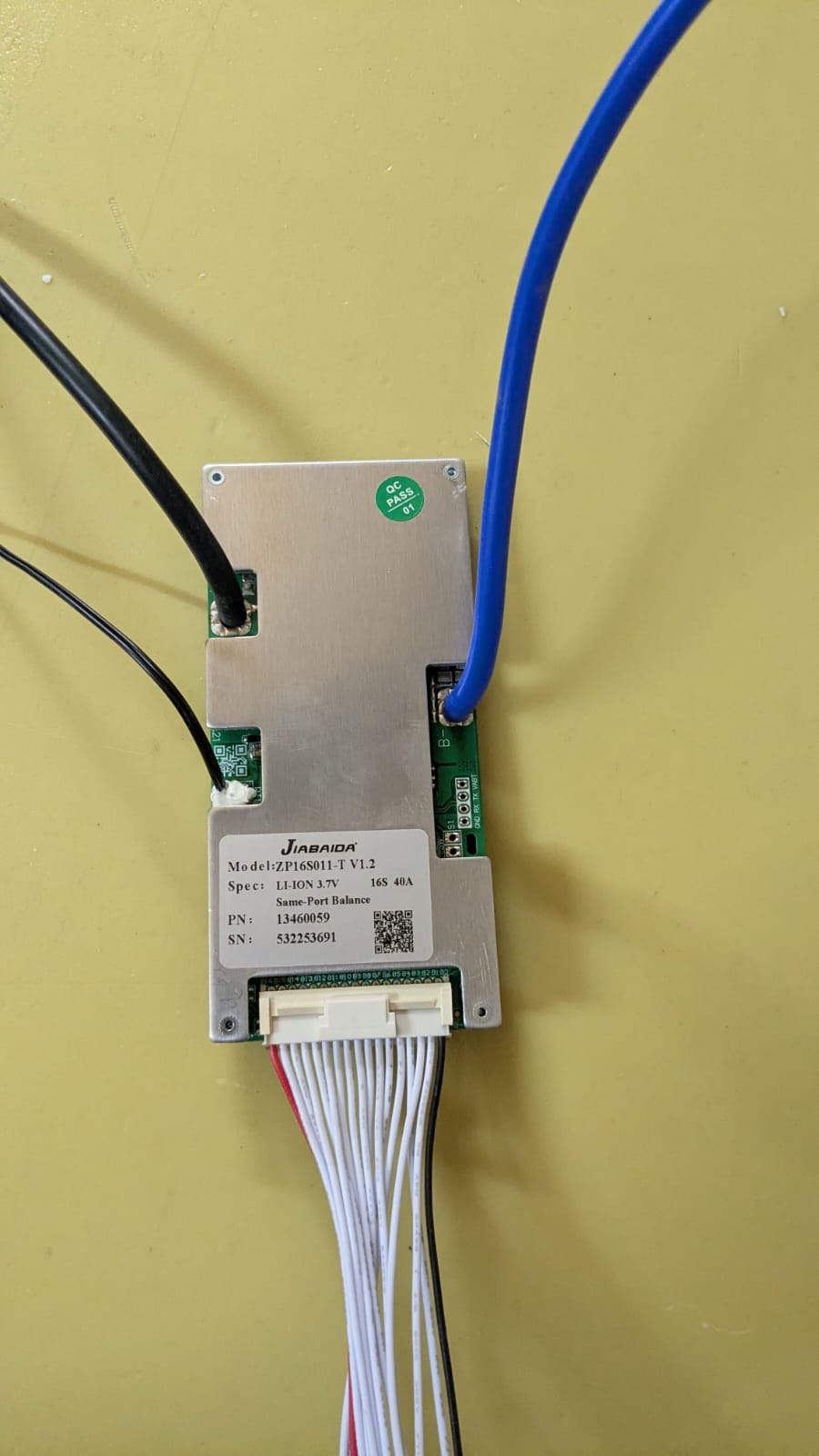
Description
What you should look for in a 16S-40A NMC BMS
For a 16-cell in series (16S) pack using NMC (Nickel-Manganese-Cobalt) lithium chemistry, and a ~40 A current capability, here are key spec/features to verify:
1. Chemistry & series match
-
The BMS must support NMC chemistry (not just LFP). For example: One product listing states “Battery Type : Li‐ion / NMC … 16S (59.2V nominal / 67.2V max)” for the hardware 16S40A model.
-
Make sure the series count is exactly 16S (or supports 16S) so voltages line up (for NMC about ~16×3.7 V nominal ≈ 59 V, full charge maybe ~67.2 V as one spec sheet shows).
-
Ensure the cut-off voltages per cell are acceptable for your cells (overcharge, under‐voltage, etc) for NMC.
2. Current rating (continuous + peak)
-
If the BMS says 40 A continuous, that means under normal conditions it’s rated to handle 40 A of charge/discharge. For example: some listings for 16S 40A show that spec.
-
Check the peak capability (for brief surges) especially if you have motors or high transient loads. Some higher spec BMS list peak e.g. ~60 A for 30 seconds
-
Also check the wiring and MOSFETs, thermal management – 40 A at ~60 V pack means ~2400 W of power, so heat and wiring matter.
3. Protection features & balancing
-
Look for over-charge, over-discharge, over-current (both charge/discharge), short circuit, temperature protection. Many BMS list these. Eg: one 16S 40A NMC spec lists “Over-Voltage / Over-discharge / Short circuit” etc.
-
Cell balancing: passive (dissipative) or active — passive is common in this range. If your cell capacities are large, check the balancing current (how fast it can equalise).
-
Operating temperature range: check that it matches your ambient conditions and expected use. Eg: one spec lists -20 °C to +75 °C.
-
Port configuration: “common port” (charge/discharge on same terminals) vs separated charge/discharge ports — makes difference for wiring.
4. Monitoring / communication / “smart” features
-
If you just need protection and basic balancing, a semi-smart or hardware BMS might suffice.
-
If you want CAN, Bluetooth, SOC/SOH display, remote monitoring — then get a “smart” BMS style. Some 16S NMC BMS models list CAN/Bluetooth.
-
Decide if you need that based on your application (EV, ESS, telecom, etc).
-
In EV use, battery monitoring is often beneficial (pack health, balancing, fault diagnostics).
5. Installation & wiring considerations
-
Wiring harness: balance leads for 16 cells, heavy current leads. Mistakes here can cause failures. For example: there are forum posts about BMS not working because the balance lead was incorrectly wired.
-
Thermal management: at 40 A, expect heat generation; ensure proper cooling and layout.
-
Matching your cells: If your cells are large capacity, high current capable, the BMS should not become the limiting factor.
-
Make sure the BMS voltage rating (pack max voltage) corresponds to your pack. For 16S NMC, max ~67.2 V is shown in specs.
-
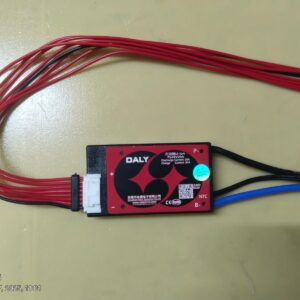
Quality/vendor support: some users raise concerns about support and reliability of certain brands. Eg: on Daly BMS some complaints about customer service
Reviews
There are no reviews yet.