
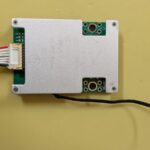
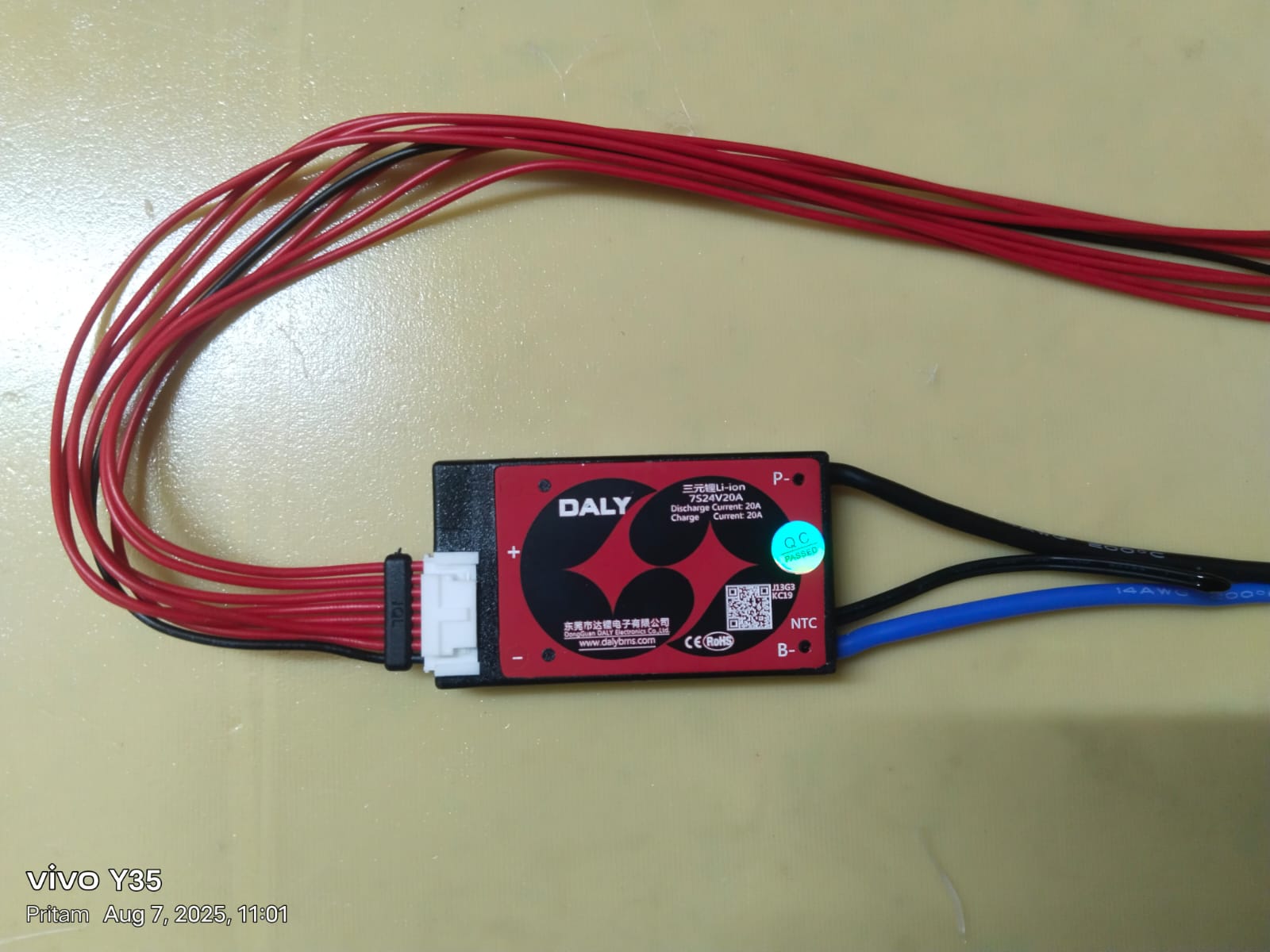
Description
Key Specifications & Features
According to multiple sources, here are the main specs for this 10-series (10S) / 36 V pack BMS from DALY:
-
Configuration: 10 cells in series (10S) ⇒ nominal ~36 V for Li-ion/NMC type (10×3.7V) and full charge ~42 V.
-
Continuous discharge current: 20 A.
-
Charge current spec: around 10 A (according to one spec sheet) for this board.
-
Over-charge detect voltage (per cell, for NMC/Li-ion): ~4.25 V ±0.05V.
-
Over-discharge protect voltage (per cell): ~2.7±0.1V.
-
Balance current: ~30 mA ±5 for NMC/Li-ion.
-
Operating temperature range: e.g., -20 °C to +70 °C in some listings.
-
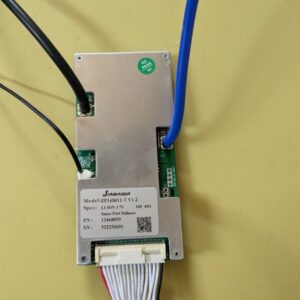
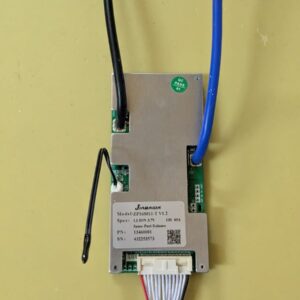
Physical / wiring: Common “P-/B-” port style board (charge & discharge using the same terminals) in many listings.
🛠 Suitability for Your Use Case
Given your context (you’ve been looking at BMS boards for EV / battery-pack use), here’s how this board stacks up:
Good fit if:
-
Your battery pack is indeed 10S (10 cells in series). If you are planning a 36 V nominal pack this matches.
-
Your continuous discharge requirement is 20 A or less. For moderate loads (e.g., a scooter, e-bike, smaller EV load) this might suffice.
-
You are using Li-ion/NMC chemistry (or board spec supports it). It appears this board supports Li-ion/NMC packs.
-
You are fine without advanced “smart BMS” features (CAN, Bluetooth, remote monitoring). This is a hardware‐type BMS.
May not be ideal if:
-
Your load requires much higher current (e.g., continuous >20 A or large surge currents). In EV applications motors often draw high surges, so you might want a board rated higher (30A, 40A or more) for margin.
-
Your battery pack is not 10S (for example if you planned 13S, 14S, 16S etc). Then the voltage ranges and cut-offs won’t match this board.
-
You want smart monitoring features (voltage over CAN, cell-by-cell monitoring on app, logging). This board appears to be a simpler protection + balancing board without fancy features.
-
Thermal/heat management is critical: At 20 A discharge over time the MOSFETs will generate heat; ensure good wiring, cooling, proper gauge wires.
⚠️ Important Cautions & Things to Double-Check
-
Chemistry & configuration match: Confirm the board supports your exact chemistry (NMC/Li-ion) and that the series count is indeed 10S. Using mismatched series or chemistry can lead to mis-cutoff protection, imbalance, or unsafe behavior.
-
Wiring & balance leads: Correct wiring of the balance connector (10 leads plus main power leads) is crucial. Mistakes here are frequent failure points.
-
Current / surge capability: Even if the board says 20 A continuous, real‐world loads might peak higher. Check motor/controller specs, include margin. Also check if the board handles surges without overheating.
-
Heat dissipation: At 20A and ~36-42V you’re dealing with ~720W nominal, so wiring resistance, board layout, and cooling matter. Use thick heavy‐gauge wires, secure mechanical mounting, avoid high ambient temps.
-
Protection thresholds: Check cut-off voltages in the datasheet to ensure they match your cell specs. Example: Overcharge detect ~4.25V/cell for NMC, over-discharge ~2.7V/cell.
-
Vendor authenticity / quality control: Some users report issues with cheaper BMS boards (especially cheap clones). For example:
“Has anyone here experienced issues with DALY BMS? … The cells started off a little out of balance … The imbalance is growing, not shrinking.”
So pick a reputable vendor and check reviews. -
Warranty & support: Some listings may have limited warranty; ensure you buy from a vendor that offers support in India / your region.
-
Batch / version check: Make sure the model you buy is correctly labelled for 10S/20A, not a similar board rated differently (e.g., 13S or 20A vs 30A etc).
-
Use in EV context: While this board can be used for EV, ensure your controller/motor isn’t exceeding its rating, and that you account for surge currents and adequate pack capacity/discharge. For higher power EV use you may want a more robust board.
🔍 My Verdict
If I were to rate it: For a moderate power 36 V / 10S pack (say for an e-bike, small scooter, or moderate ESS) yes, the Daly 10S-36V-20A board is a reasonable choice — good value and matching spec.
However, for a more demanding EV application (higher currents, frequent heavy loads, long durations) I might upgrade to a BMS with higher current rating (30-40A+), or even a “smart” BMS with monitoring.
Reviews
There are no reviews yet.